
Automated Cross-Hole Deburring of SUS303 Medical Manifold Blocks.
Replace manual finishing with a fully automated CNC step. A UFIBER™ UF2470 Ø7 mm ceramic cross-hole brush removed the burrs at Ø10 mm cross-hole intersections in SUS303 stainless steel medical manifolds, running dry at 9,000 RPM and 500 mm/min, and reached a surface finish of Ra 0.135 µm at 10,000 parts per month.
See the results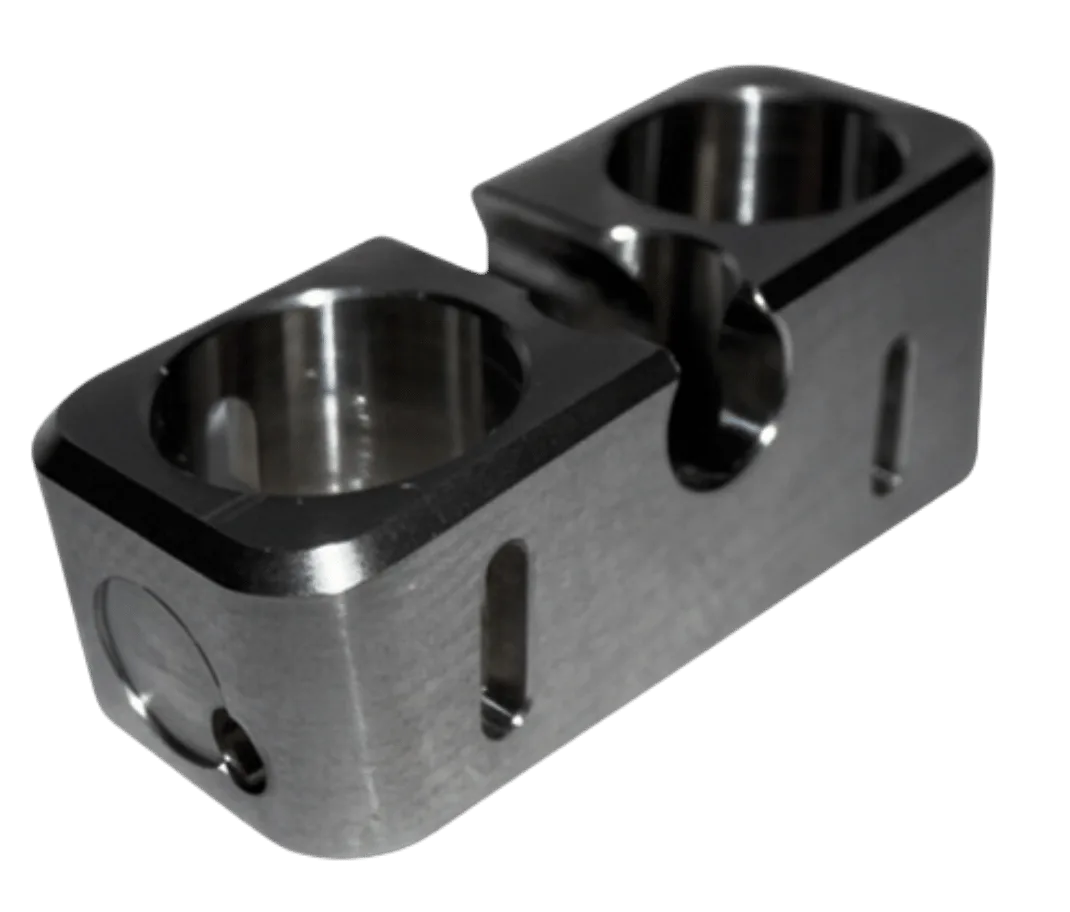 UF2470 · Ø7 mm · #600
- Brush
- UF2470
- Spindle speed
- 9,000 RPM
- Table feed
- 500 mm/min
- Surface finish
- Ra 0.135 µm
Burrs at every intersection.
The challenge
Eliminate burrs generated during cross-hole drilling on CNC-machined medical manifold blocks, and replace manual deburring with a fully automated, repeatable CNC process. Cross-hole burrs caused:
- Inconsistent edge quality
- High labor dependency
- Risk of damaging precision-machined surfaces
- Extended production cycle times
- Difficulty maintaining repeatable quality in large production volumes
At 10,000 medical components per month, manual deburring was no longer sustainable.
Application details
- Industry
- Medical
- Application
- Cross-hole deburring of precision-machined manifold blocks
- Part
- Precision medical manifold block
- Material
- JIS SUS303 / AISI 303 / UNS S30300 / EN 1.4305 / X10CrNiS18-9
- Machine
- DMU 50 3rd Generation
- Cross-hole diameter
- Ø10.0 mm (0.394")
- Cross-hole feature length
- 14 mm (0.551")
- Production volume
- 10,000 parts/month
The tool behind
the result.
- Brush diameter
- Ø7 mm (0.276")
- Grit
- #600 Orange
How it works
The UFIBER ceramic fibers expand under centrifugal force, so the brush conforms to the internal hole geometry and removes the burrs at the hole intersection. Unlike conventional abrasive brushes, UFIBER keeps stable cutting performance and excellent repeatability in automated CNC production.
| Workpiece material | SUS303 / AISI 303 / EN 1.4305 |
|---|---|
| Cross-hole diameter | Ø10 mm (0.394") |
| Cross-hole feature length | 14 mm (0.551") |
| Machine | DMU 50 3rd Generation |
| Spindle speed | 9,000 RPM |
| Table feed | 500 mm/min (20 in/min) |
| Coolant | Dry |
| Reported result | Burrs completely removed, Ra 0.135 µm |
These values describe this application. Confirm the setup for your own parts with NOGA MT.
Watch the process
VIDEOFrom manual deburring
to an automated CNC process.
Slot up
Before UFIBER
MICROSCOPE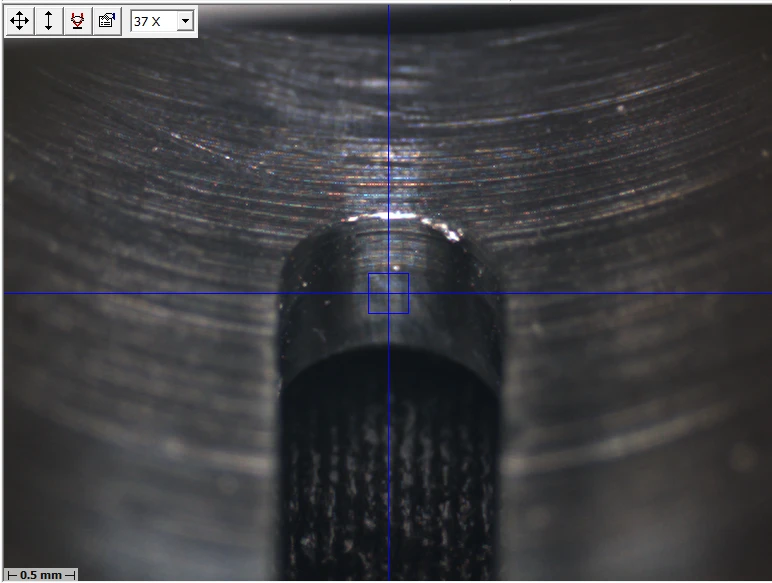
After UFIBER
MICROSCOPE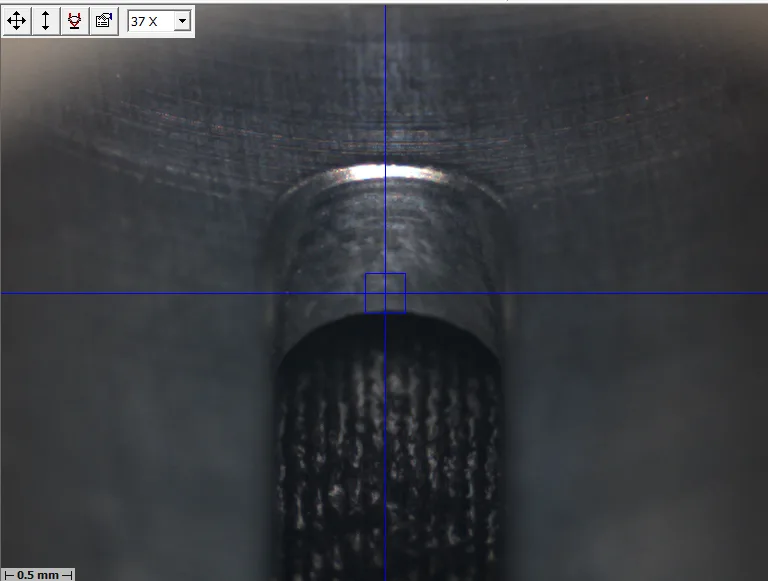
Slot down
Before UFIBER
MICROSCOPE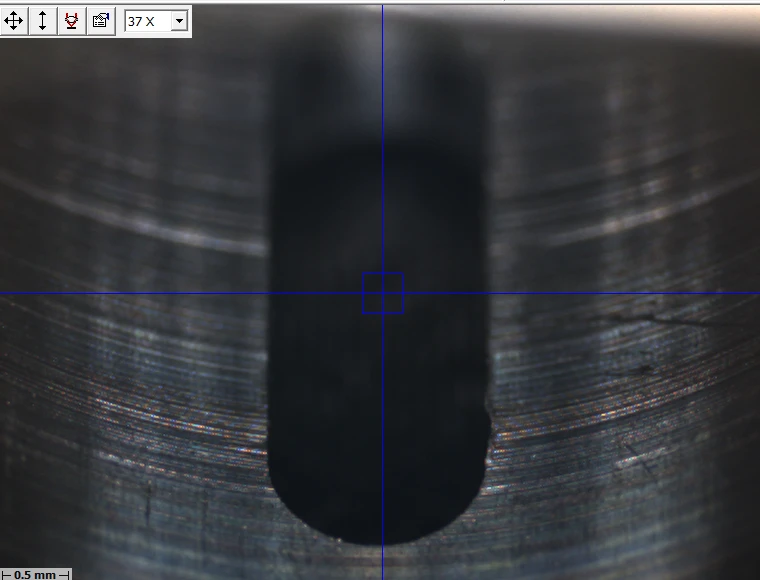
After UFIBER
MICROSCOPE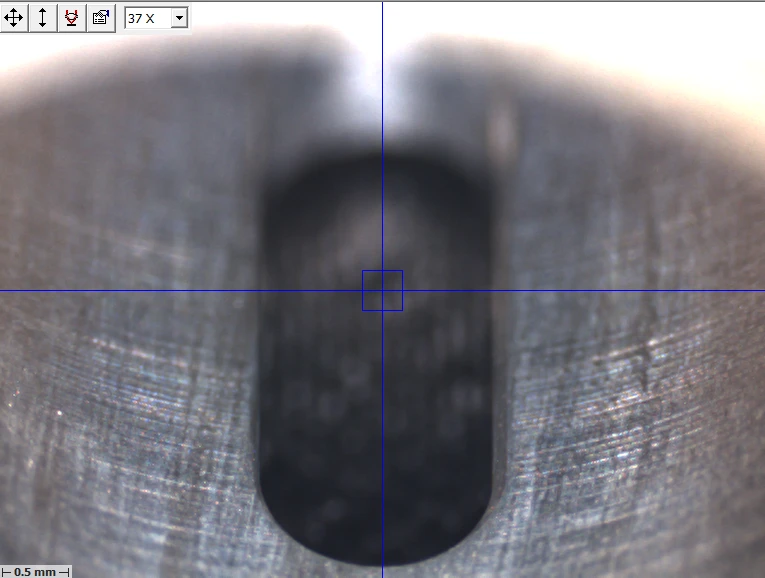
Surface roughness measurement
Ra 0.135 µm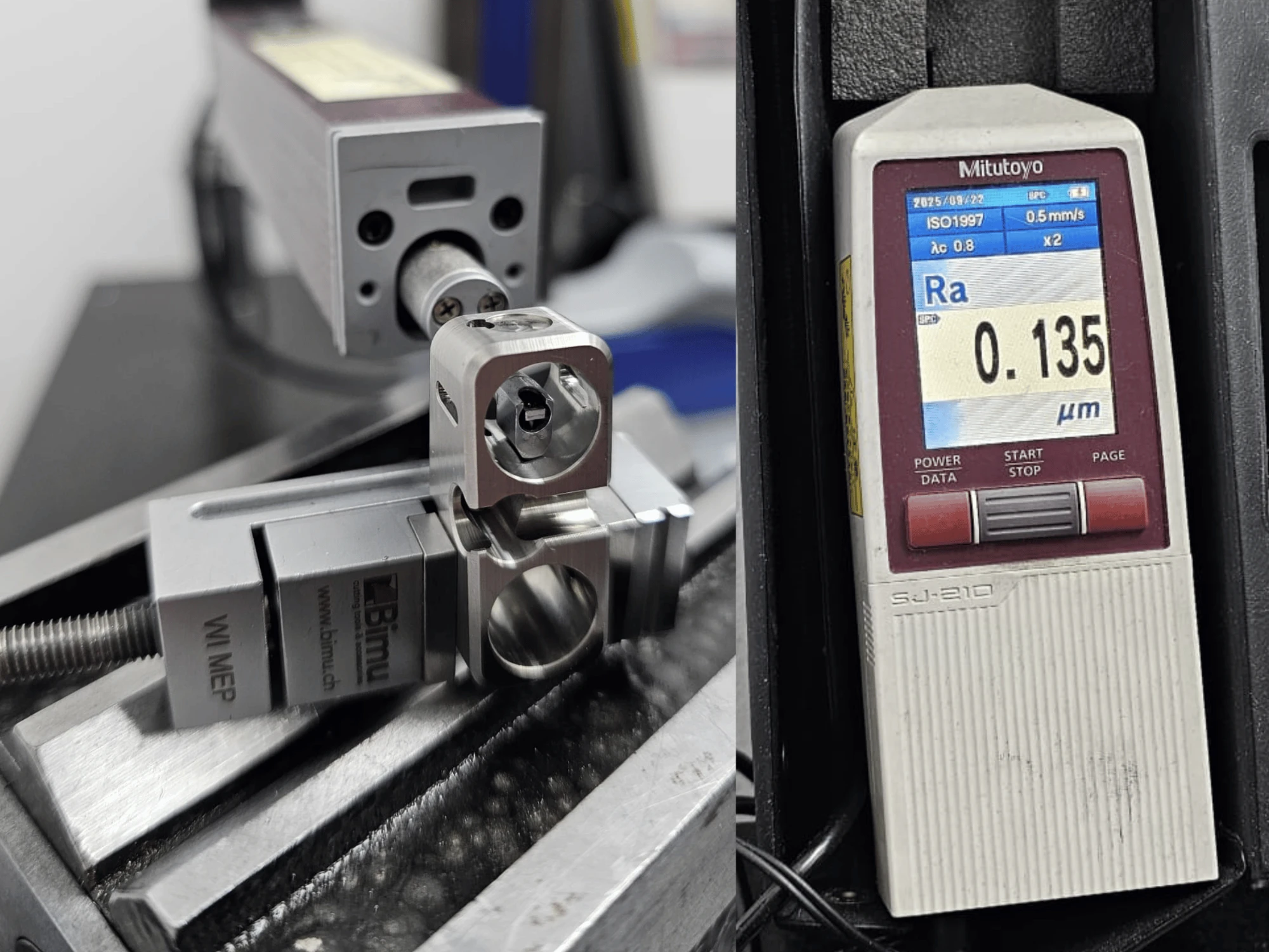
Key benefits achieved
- Fully automated cross-hole deburring
- Consistent burr removal across production batches
- Elimination of manual deburring operations
- Improved internal surface quality
- Reduced operator dependency
- Improved process repeatability
- Suitable for high-volume medical manufacturing
- Protection of critical precision features
Why UFIBER for medical manufacturing?
Medical components often contain internal passages, intersecting holes and precision surfaces that are hard to deburr by hand without damaging the part. UFIBER ceramic fiber brushes provide:
- Stable grinding performance
- Excellent conformity to complex geometries
- Long tool life
- Automation compatibility
- Superior surface finish
- Reliable burr removal in stainless steel
The nano-technology ceramic fibers continuously expose fresh abrasive grains, keeping cutting performance stable throughout the tool life.
Conclusion
With the NOGA MT UFIBER™ cross-hole brush, the customer turned a labor-intensive manual deburring operation into a fully automated CNC process.
The solution delivered reliable burr removal, improved surface finish and repeatable quality on SUS303 medical manifold blocks at 10,000 parts per month, improving productivity and reducing manual intervention while meeting medical quality standards.