
Polishing a CoCrMo Tibia Component Mold on the CNC.
Remove end-mill marks and lower surface roughness on a cobalt-chromium-molybdenum (ASTM F75) mold for a medical tibia component, using UFIBER™ ceramic fiber surface brushes. In this successful application, a three-step sequence of Ø6 mm brushes ran at 9,000–10,000 RPM and 5,000 mm/min with coolant. The process reached Ra 0.05–0.06 µm, against Ra 0.08 µm with the competitor brush set, in the same 5-minute cycle.
See the trial result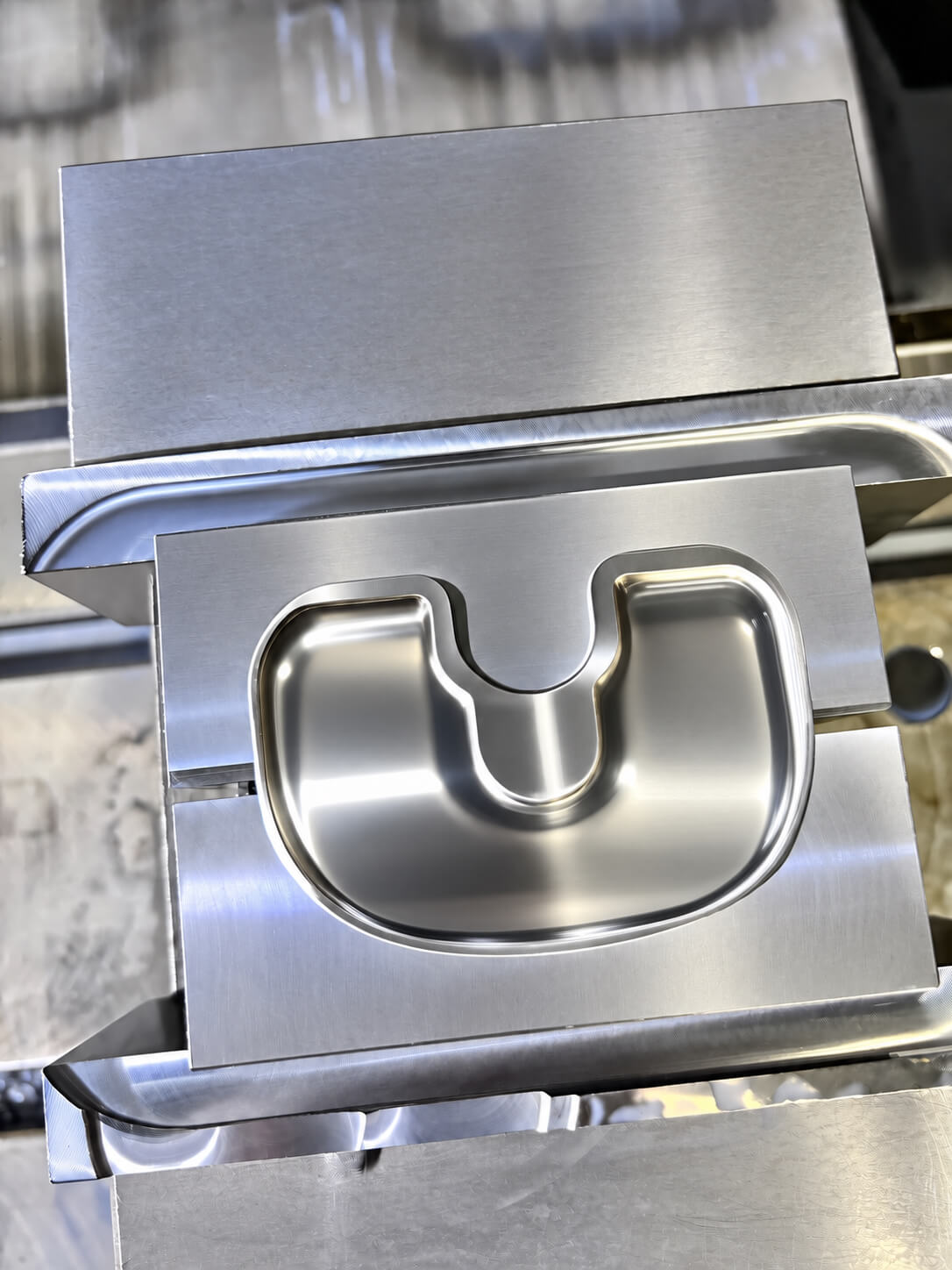 UF1206 → UF1406 → UF1706 · Ø6 mm
- Brushes
- 3 × Ø6 mm
- Spindle speed
- 9,000–10,000 RPM
- Feed rate
- 5,000 mm/min
- Surface roughness
- Ra 0.05 µm
Polishing out end-mill marks.
The task
After milling, the flat surface and cavity of a CoCrMo (ASTM F75) mold for a size 4 medical tibia component carried visible end-mill marks. The goal was to remove the marks and improve surface roughness on the machine, as part of the CNC cycle, since the cavity finish carries over to the molded part.
The trial
The application was tested with three UFIBER surface brushes run in sequence from rough to finish, with down-milling and up-milling passes and coolant. The result was compared with the competitor ceramic fiber brush set used for the same operation. The application report confirmed a successful result.
Three brushes,
rough to finish.
- 1UF1206#200RoughUF-FB-P-D006-L30
- 2UF1406#600Semi-finishUF-FB-O-D006-L30
- 3UF1706#1200FinishUF-FB-R-D006-L30
- Brush diameter
- Ø6 mm
- Fiber projection
- 10 mm
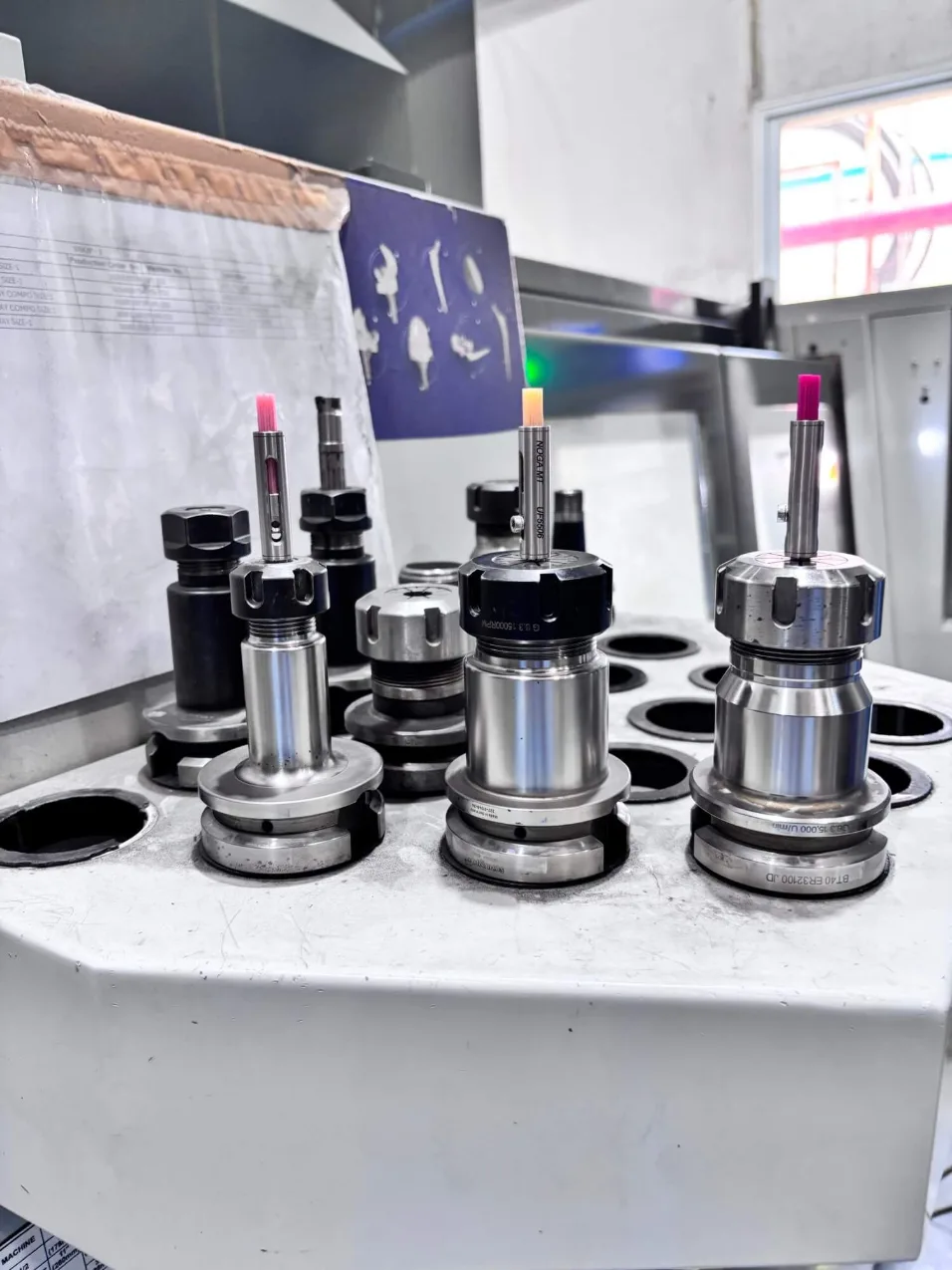
| Workpiece material | CoCrMo alloy, ASTM F75 |
|---|---|
| Component | Mold for tibia component, size 4 |
| Machined feature | Flat surface and mold cavity |
| Brush diameter | Ø6 mm, all three steps |
| Fiber projection | 10 mm |
| Spindle speed | 9,000 RPM rough & semi-finish · 10,000 RPM finish |
| Feed rate | 5,000 mm/min, all steps |
| Feed per revolution | 0.56 mm/rev · 0.50 mm/rev finish |
| Milling direction | Down-milling and up-milling |
| Coolant | Yes |
| Cycle time | 5 min, same as competitor |
| Reported result | Ra 0.05–0.06 µm vs 0.08 µm competitor |
These values describe this trial. Machine model and brush life were not specified in the report. Confirm the setup for your own application with NOGA MT.
Lower Ra in the same cycle time.
Before UFIBER
AFTER MILLING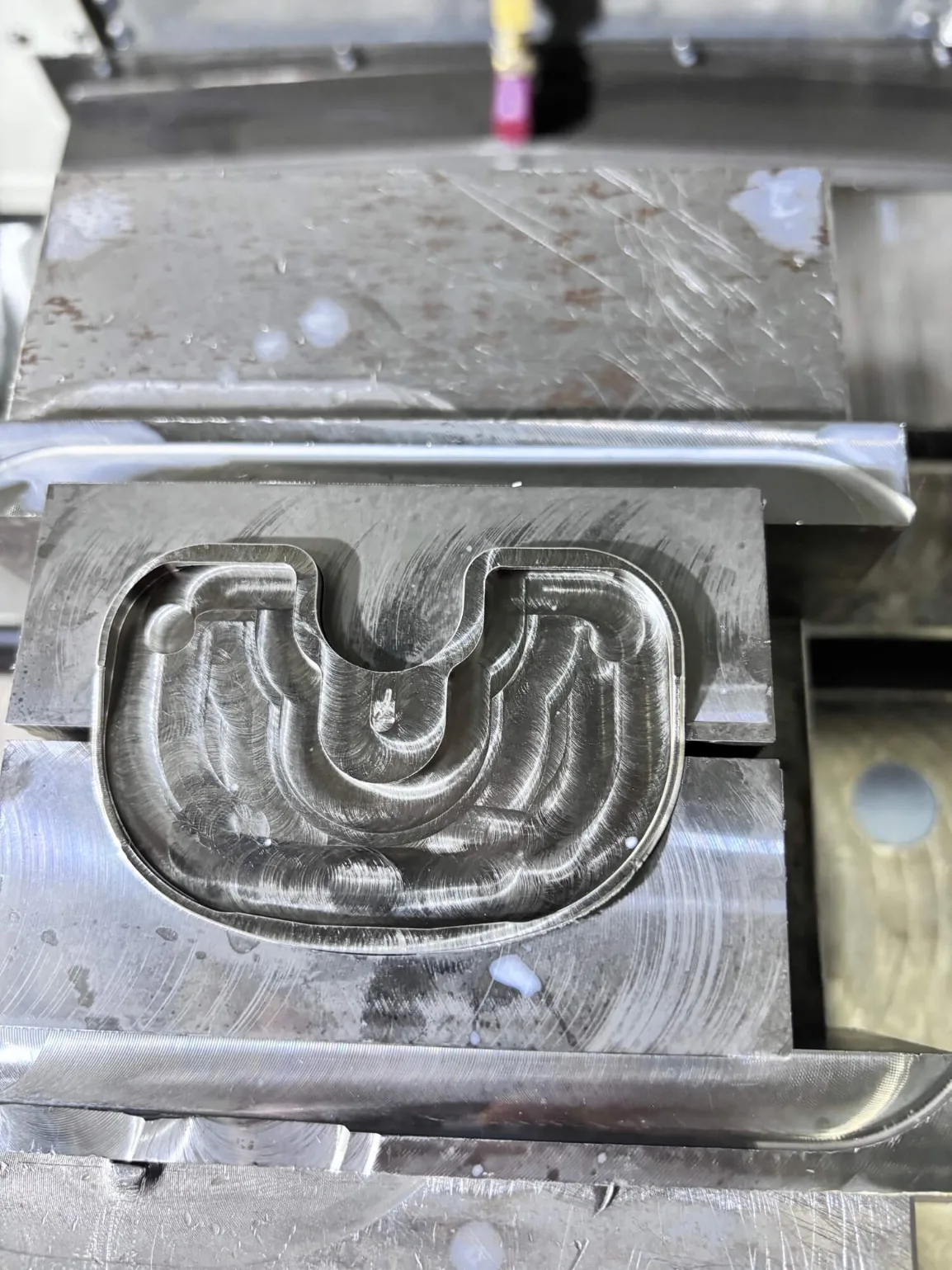
After UFIBER
AFTER UF1206 → UF1406 → UF1706Both views are framed on the cavity from the supplied photos. The photos were taken under different lighting.
Surface roughness after polishing
Ra in µm · lower is better · same 5-minute cycle
View the complete before and after photos