
Robotic Deburring Tools
Axially compliant deburring and finishing tools for robot spindles
Automate the deburring you still do by hand. NOGA MT robotic deburring tools mount in the robot's electric spindle: UFIBER® ceramic fiber brushes and discs remove burrs and break edges, while a spring-loaded Floating Damper keeps contact pressure constant as parts and paths vary. The same tools run on CNC machines, so a process proven in the machine can move to a robot cell.
- Axial compliance
- Electric spindle
- Self-sharpening ceramic fiber
- Edges · cross-holes · grooves
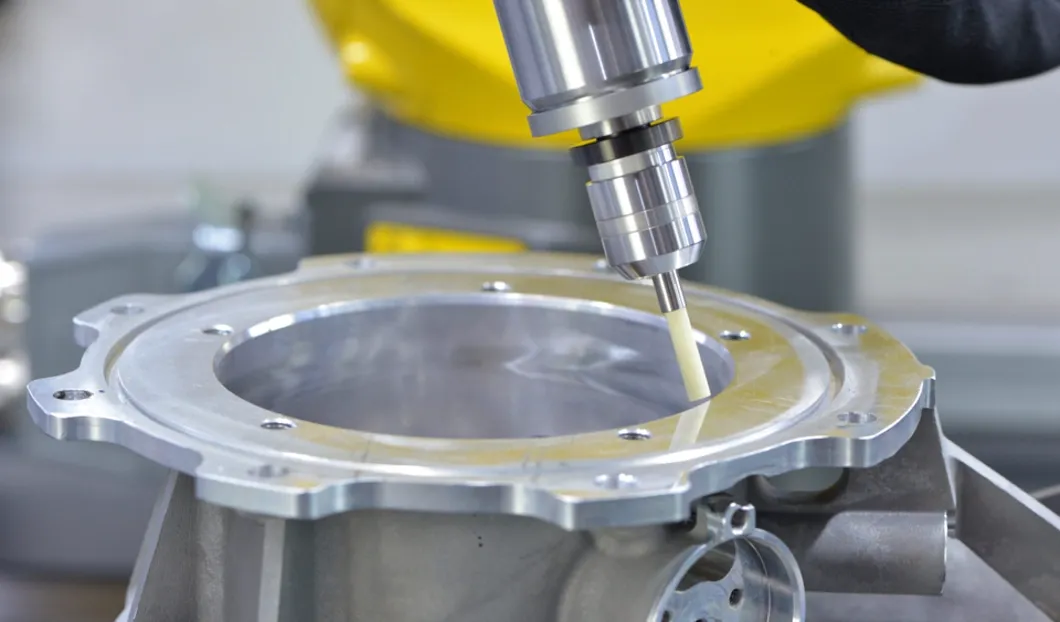
- Ø1–Ø100 mmbrush diameters, 173 brush SKUs
- #150–#600010 grits, deburring to polishing
- 6 mm · ≈20 NEnd-Type damper stroke and spring force
- 15 min → 60 sdeburring time per part, CNC case study
Choose your robotic deburring tool
A robotic deburring setup has two parts: a compliant holder that keeps contact stable, and the deburring media that does the cutting.
1 · Compliance: UFIBER Floating Dampers
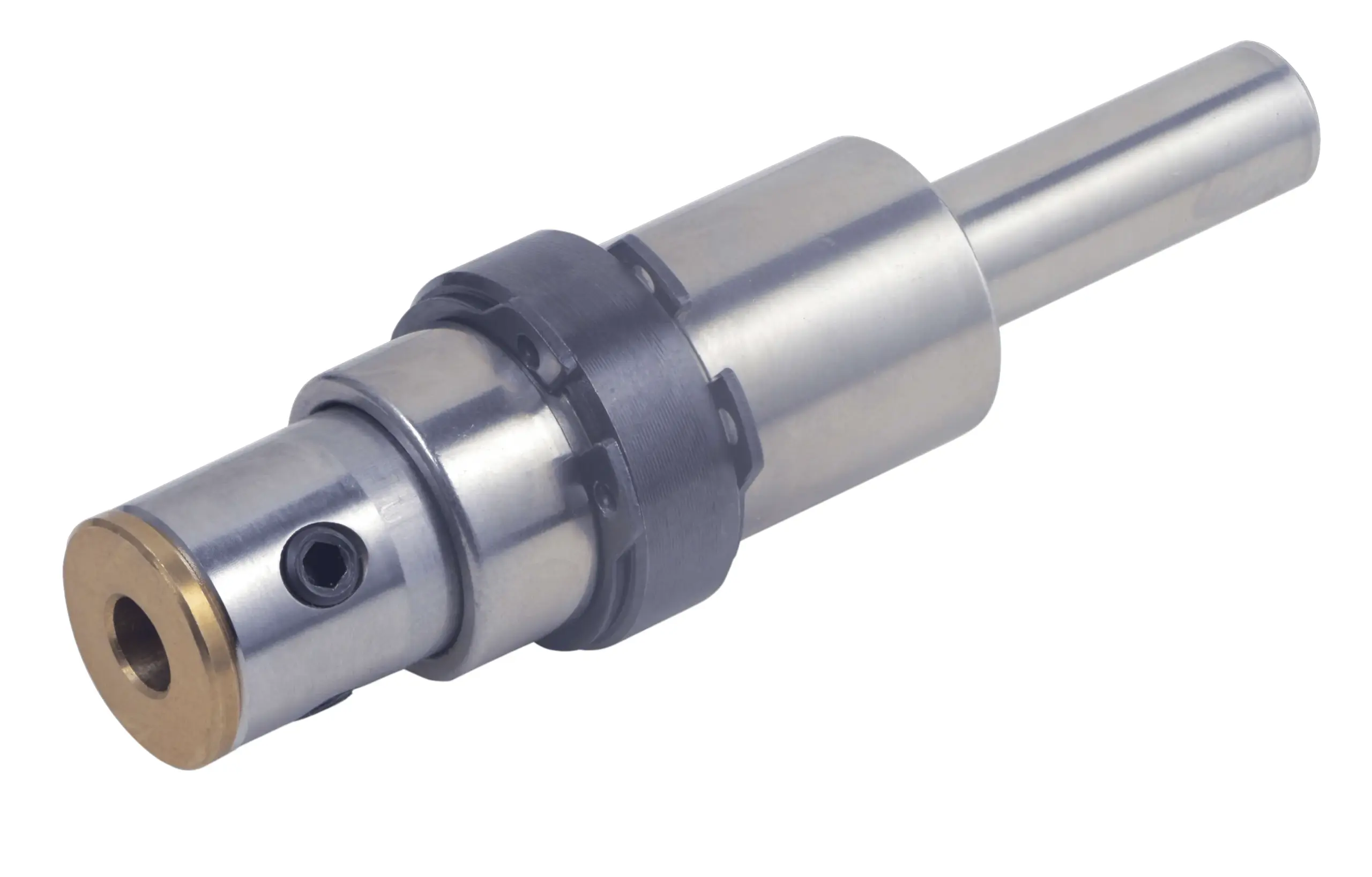
End-Type Floating Damper
Compact straight-shank damper that clamps in the electric spindle on the robot.
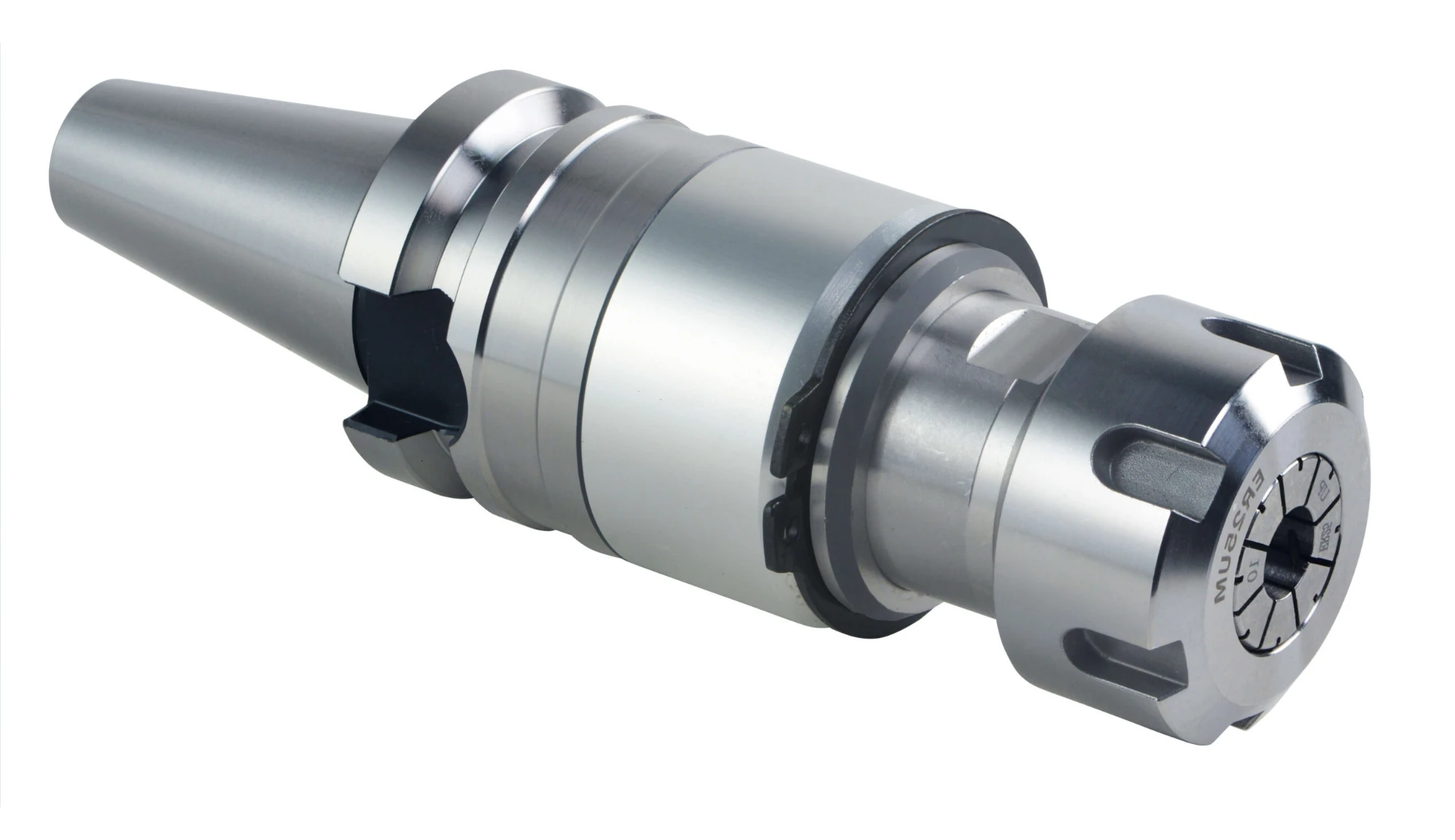
BT30 / BT40 Floating Damper
Runs the same UFIBER process in the machining center, before it moves to a robot.
2 · Deburring media: UFIBER ceramic fiber
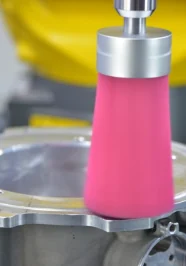
Surface Brush
Edge deburring, edge finishing and polishing on flat surfaces and broad geometry.
View range →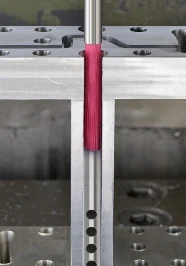
Cross-Hole Brush
Fibers expand by centrifugal force to deburr internal bores and intersections.
View range →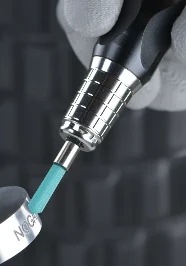
End-Type Brush
Localized deburring on ends, corners and recesses, straight or 45°.
View range →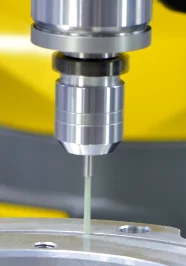
Point-Type Brush
Precision finishing in small, narrow or complex areas, from Ø1 mm.
View range →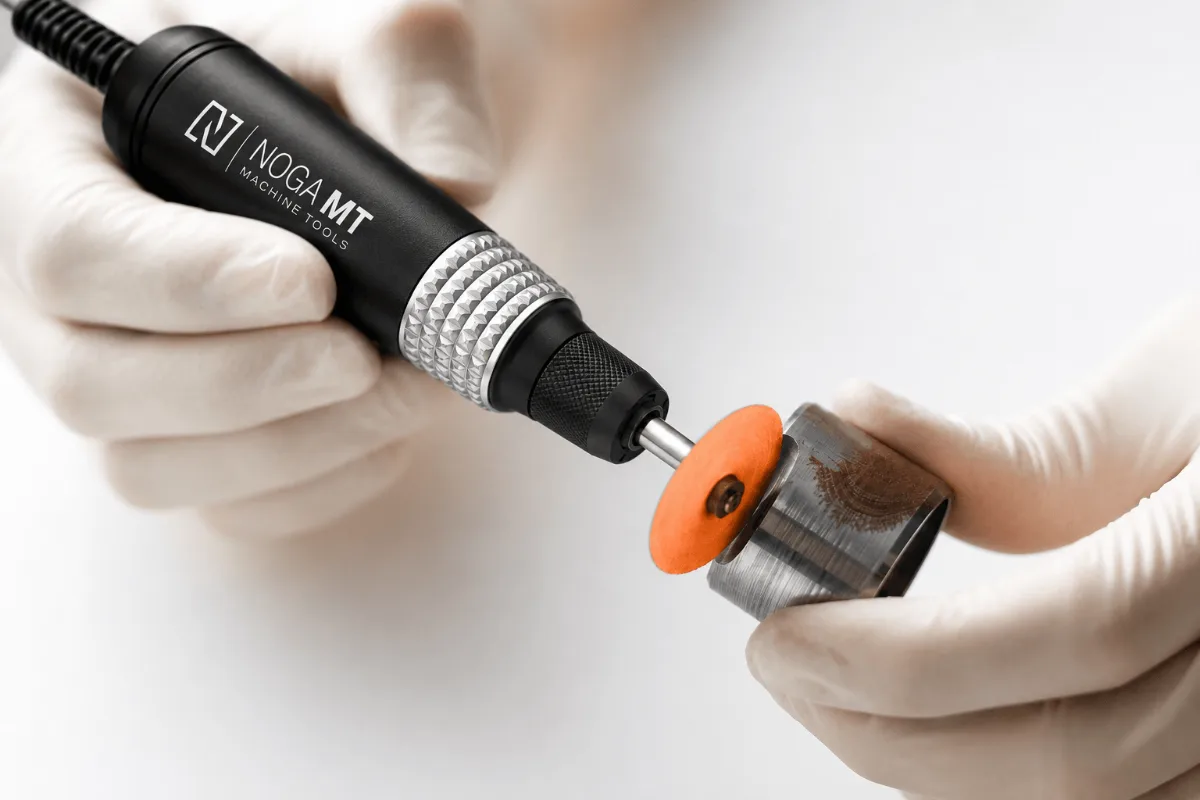
Radial Ceramic Fiber Disc
0.8 mm disc that cuts with its outer edge: grooves, ribs, slots, side walls.
View range →Select by application
| Application | UFIBER tool | Size range | Max speed |
|---|---|---|---|
| Edges, flat surfaces, cutter marks | Surface Brush | Ø6–Ø100 mm | Up to 12,000 RPM (Ø6) down to 1,000–1,400 RPM recommended (Ø100) |
| Cross-holes and internal bores | Cross-Hole Brush | Ø1.5–Ø11 mm, chosen by pilot hole | Up to 20,000 RPM by size |
| Corners, ends, recesses | End-Type Brush | Ø5 mm, straight or 45° | 12,000 RPM |
| Small, narrow features | Point-Type Brush | Ø1.0–Ø3.0 mm | 12,000 RPM |
| Grooves, ribs, slots, side walls | Radial Ceramic Fiber Disc | Ø13–Ø30 mm, 0.8 mm thick | 9,000 RPM (6,000–8,000 recommended) |
On a robot with the End-Type Floating Damper, the spindle is limited to 12,000 RPM and the brush shank (ØDS) is Ø6 mm with the damper's removable bush fitted, or Ø10 mm with the bush removed (UF8851 and UF8852 alike). Exact RPM and feed per size are in the UFIBER Technical Center.
Not sure which grit? The UFIBER AI Assistant suggests a brush, grit and starting parameters.
Fits the spindle on your robot
| Drive | Electric spindle on the robot flange. Radial discs: electric drive only, no air tools. |
| Holder | End-Type Floating Damper, straight shank clamped in the spindle: Ø6 mm (UF8851) or Ø10 mm (UF8852), high-speed balanced |
| Brush shank | Ø6 mm with the bush fitted, Ø10 mm with the bush removed (both models) |
| Speed | Damper up to 12,000 RPM; never above the brush's own limit |
| Compliance | Axial, 6 mm stroke, ≈20 N spring pressure; compensates part variation and bristle wear |
| Coolant | No through-spindle coolant through the damper |
| Robots | Brand independent: the tools mount in the spindle. Demonstrated on a FANUC LR Mate 200iD/7L. |
Repeatable results, part after part
A robot repeats its path, but parts don't stay identical: casting tolerances, fixturing and bristle wear all change the contact. These four points keep the result consistent.
Self-sharpening tool
Ceramic fibers keep exposing fresh abrasive, so the cut stays stable over tool life.
Floating compliance
The spring holds constant pressure and absorbs part variation and bristle wear, without reprogramming the path.
Preload and ramp
Compress the spring before feeding, then arc in and out for smoother engagement and fewer tool marks.
Correct contact
Approach vertically, avoid side contact, and never let the tool drop into pockets.
Where robotic deburring with UFIBER fits
- Edge deburring and edge breaking on machined aluminium, steel and stainless parts
- Cross-hole intersections and internal bores
- Grooves, ribs, slots and side walls
- Cutter-mark removal and polishing after machining
- Replacing manual buffing that leaves line marks
Shown on a robot cell at EMO 2025
At EMO Hannover 2025, NOGA MT ran UFIBER tools live on a robot cell built by its own engineering team. A quick-change spindle let the robot swap between UFIBER tools during the demonstration. The FANUC robot was provided by Assatec Robotics.
This was a show demonstration, not a measured production trial.
| Robot | FANUC LR Mate 200iD/7L: 6 axes, 7 kg payload, 911 mm reach. Provided by Assatec Robotics, an authorized FANUC integrator in Israel. |
| Spindle | NAKANISHI E4000 controller with NR4040-AQC quick-change spindle (up to 40,000 min⁻¹) and EM-4020 motor |
| Tool change | Six QC5-16 quick-change collet holders, one per tool |
| Collets | Ø3, Ø6 and Ø10 mm |
| Air supply | 6–8 bar |
| Compliance | Brushes clamped directly in the collets, without a damper. Option: the UF8852 End-Type Floating Damper (Ø10 mm shank) fits the Ø10 collet; with the damper, run at 12,000 RPM or less. |
Demo program: tools and robot paths
| Station | Tool | Operation | Robot path | Demo values (reduced) |
|---|---|---|---|---|
| 1 | UB3010 UBURR holder, Ø8.0–8.5 mm holes | Front and back deburring, hole 1 | Position above the hole, start the spindle, feed down through the hole, feed back up out of it, stop the spindle | 1,500 RPM · 150 mm/min (0.1 mm/rev) |
| 2 | UB3010 UBURR holder, Ø8.0–8.5 mm holes | Front and back deburring, hole 2 | Same cycle as station 1 | 1,500 RPM · 150 mm/min (0.1 mm/rev) |
| 3 | UF1740 Surface Brush Ø40, #1200 | Top face deburring and polishing | Circular path across the top face | 2,000 RPM · 400 mm/min · DOC 0.1 mm |
| 3 | UF1740 Surface Brush Ø40, #1200 | Ø56 bore | Helical interpolation down into the bore, then back up along the same path | 2,000 RPM · 400 mm/min · DOC 0.1 mm |
| 4 | UF3820 Point-Type Brush Ø2, #2000 | Groove deburring and polishing | Circular path along the groove | 8,000 RPM · 300 mm/min · DOC 0.1 mm |
| 5 | UF4650 End-Type Brush Ø5, #1000 | Ø22 face around a hole | Circular path on the face | 8,000 RPM · 400 mm/min · DOC 0.1 mm |
| 6 | UF2770 Cross-Hole Brush Ø7, #1200 | Ø10 cross-hole | Enter without rotation, start the spindle, stroke back and forth inside the hole without leaving it, stop the spindle, then exit | 7,000 RPM · 300 mm/min stroke |
Tools and paths as programmed for the EMO 2025 demonstration, in the order shown in the video. Speeds, feeds and DOC were set deliberately low for the show demonstration, below production values. For production, use the published starting values in the UFIBER AI Assistant and the UBURR Advisor.
Measured results from automated deburring
Both results below were recorded on CNC machines with the same UFIBER tools used on robots. Robot results depend on the cell, so every robotic project starts with a trial. For a starting point, see the robotic edge deburring setup example.
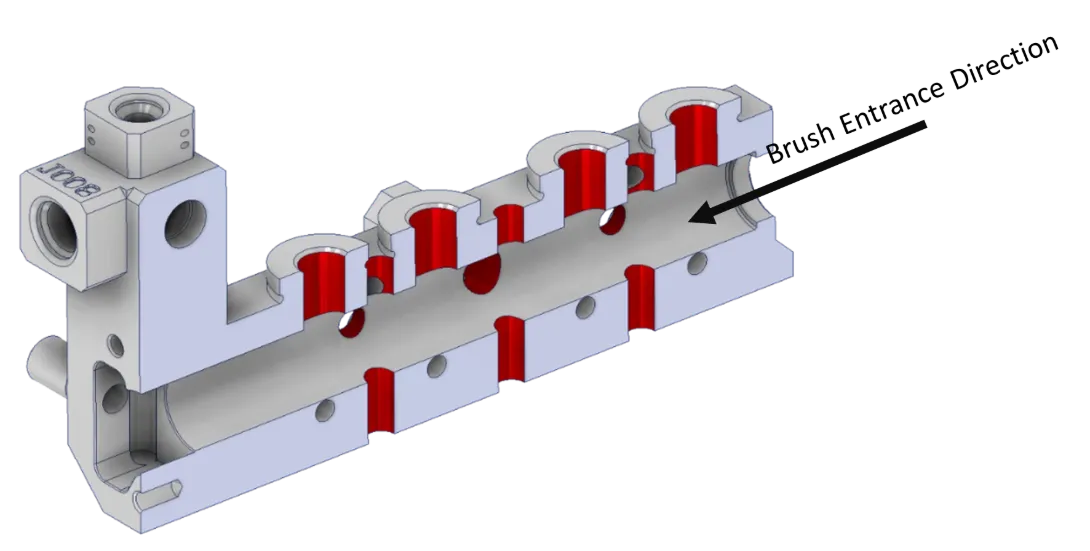
15 min → 60 s
Cross-hole intersections 140 mm deep, deburred with a UF1715 Ø15 mm brush at 7,000 RPM. 93.33% less deburring time per part.
Read the case study →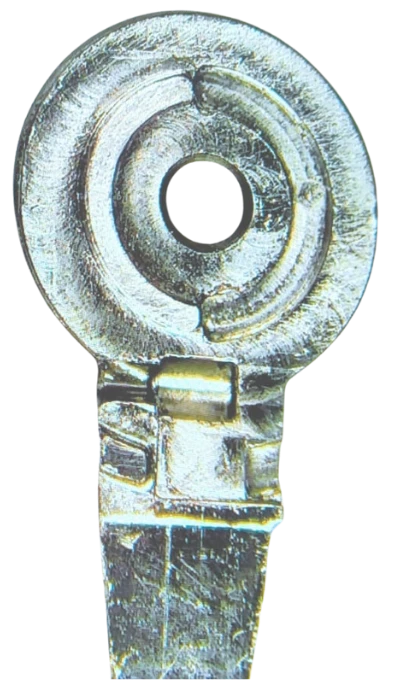
Mark-free finish
A UF4450 end brush and UF3410 point brush replaced buffing wheels on a 15 mm part. Approved for production.
Read the case study →Start a robotic trial
Send us:
- Part drawing and material
- Robot and spindle model
- A photo of the burr
- Current method and cycle time
Robotic deburring tools: FAQ
What are robotic deburring tools?
End-of-arm tools that remove burrs and break edges while an industrial robot follows the part contour. They combine a cutting or abrasive element with compliance, so contact stays steady when the part or the path varies.
Do I need a compliant spindle?
Not with NOGA MT tools. Compliance is built into the UFIBER End-Type Floating Damper (axial, 6 mm stroke, about 20 N), which clamps in a standard electric spindle on the robot.
Can UFIBER brushes run on a robot?
Yes. UFIBER ceramic fiber brushes and radial discs are rated for CNC machines, machining centers and robots. Radial discs need an electric spindle and are not for air tools. With the End-Type damper, use a brush with a Ø6 mm shank (bush fitted) or a Ø10 mm shank (bush removed) and stay at or below 12,000 RPM.
Which robots are supported?
The tools mount in a spindle, so they don't depend on the robot brand. NOGA MT has demonstrated UFIBER on a FANUC LR Mate 200iD/7L.
Which grit should I choose?
Coarse grits (#150–#400) for heavy burrs and harder materials, medium grits (#600–#1000) for general deburring, fine grits (#1200–#2000) for light burrs and edge finishing, and #3000–#6000 for polishing and micro-finishing. The UFIBER AI Assistant can suggest a starting grit for your part.
Robotic or CNC deburring: which should I choose?
Deburr in the CNC when the part is already clamped and cycle time allows. Move to a robot when deburring is a bottleneck, parts come from several machines, or the part is too large for in-machine finishing. UFIBER tools run in both.
How do I start a trial?
Send the drawing, material, robot and spindle model and a burr photo. NOGA MT recommends a brush, grit, damper and starting speed and feed.
Planning a robotic deburring cell?
Share the drawing, material, robot and spindle model and a burr photo. NOGA MT will recommend a brush, grit, damper and starting parameters for your trial.